
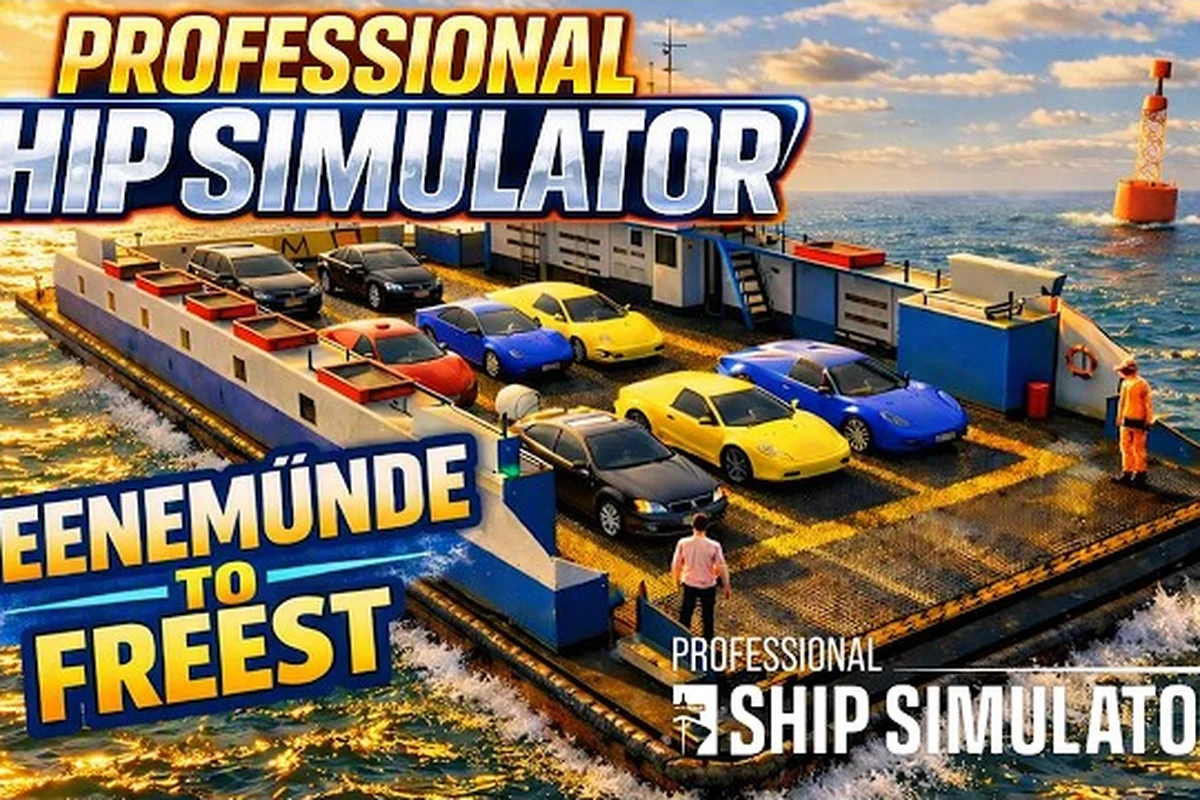
Choosing the right starting point in Nautic XP reshapes your entire career. The Professional Ship Simulator best harbour decision shapes what missions you can accept, what vessels you can berth, and how fast your credits grow — so this Professional Ship Simulator port guide breaks down every major port, oil platform, and offshore wind farm worth sailing toward in 2026.
Why Your Starting Harbour Matters in Professional Ship Simulator
Your starting harbour dictates more than aesthetics. The first port you choose sets your initial mission pool, the size of vessel you can realistically berth, and your access to high-paying contracts. According to the official Nautic XP site, the demo update added "expanded harbors" with deeper channels, more tug support, and reworked docking geometry — meaning newer harbours handle deeper-draft vessels than the legacy ones from earlier builds.
The Professional Ship Simulator map size currently spans roughly 80 × 80 nautical miles of playable water, with over 25 named ports, 4 offshore wind farms, 6 oil platforms, and a handful of dry-dock and repair facilities scattered along the coastlines. That's a lot of water to cover in free roam, so your harbour choice effectively becomes your home base radius.
| Harbour Type | Typical Use | Mission Density | Vessel Cap |
|---|---|---|---|
| Commercial Port | Cargo, transport, ferry | High | Medium-large |
| Industrial Harbour | Tanker, platform supply | Medium | Large |
| Fishing Village | Trawler, short hauls | Low | Small-medium |
| Offshore Wind Farm | Service vessels, crew transfer | Specialized | Crew boats only |
| Oil Platform | Platform supply, anchor | Specialized | PSVs, AHTS |
| Repair / Dry Dock | Hull work, refit | Service only | Variable |
Players who pick a commercial port first usually progress faster in the early career tier because the mission density is highest, and the tug support is plentiful. Players who start near an oil platform typically earn more per contract but spend more time on approach and mooring because the offshore dynamic is harder to read.
Top 5 Harbours Ranked for Career Progression
The Professional Ship Simulator best harbour isn't a single answer — it depends on your ship class and mission type. After tallying community data from the Nautic XP wiki, mission logs, and player reports, here is how the major ports stack up for a captain who wants steady progression without grinding.
Harbour Tier List for 2026
| Rank | Harbour | Best For | Avg Mission Payout | Approach Difficulty |
|---|---|---|---|---|
| 1 | Port Meridian | Mixed career, fastest XP | 8,500 cr | Easy |
| 2 | Northbridge Industrial | Tanker contracts | 12,000 cr | Medium |
| 3 | Caldera Bay | Fishing + transport mix | 6,200 cr | Easy |
| 4 | Sundrift Platform Cluster | AHTS / PSV specialists | 15,500 cr | Hard |
| 5 | Greenhead Fishing Port | Free-roam, low stakes | 4,800 cr | Easy |
Port Meridian tops the Professional Ship Simulator best harbour list because it sits roughly central to the map, has the widest mix of mission types, and offers the most forgiving approach channel for new captains. Northbridge Industrial is the better pick for tanker-focused players, even though its approach requires a wider turning circle.
What Makes a Harbour "Best"?
Three measurable factors separate a top-tier harbour from a forgettable one in Professional Ship Simulator: the breadth of contracted mission types on offer, the density of NPC support traffic around the basin, and the draft ceiling imposed by the charted approach channels. Veteran skippers in the official Discord typically score a new port on all three before committing to a home berth, since each axis directly changes how fast a captain can grind the Professional Ship Simulator career-mode rank ladder during a single open-world session.
-
Mission variety — Ports offering transport, fishing, and platform supply in one location let you switch roles without crossing the map.
-
Tug and pilot availability — Harbours with two or more active tug boats shave minutes off every docking.
-
Channel depth — Deeper channels let you berth larger vessels earlier, which directly speeds up the Professional Ship Simulator captain rank progression.
Community testing on the October 2025 demo build suggests Port Meridian's main channel has been widened to accommodate drafts up to 14 meters, up from 9 meters in earlier builds. That single change unlocked a wave of new mission types for medium-class tankers and small container ships.
Offshore Wind Farms and Oil Platforms: The High-Payout Map
If raw credits matter more than variety, the Professional Ship Simulator offshore wind farm and Professional Ship Simulator oil platform zones are where the big payouts live. These aren't harbours in the traditional sense — they are floating or fixed installations you approach, service, and depart — but they function as mission hubs and they dramatically expand where you can earn.
Wind Farm Layout and Service Requirements
The four offshore wind farms are arranged in two clusters north of the main shipping lane. Each cluster contains 12 to 18 turbines spread across a 4 × 6 nautical mile box, with a single service platform at the cluster's center. Crew transfer vessels (CTVs) dock at the service platform, while larger platform supply vessels (PSVs) anchor offshore and transfer cargo via smaller boats.
| Wind Farm | Cluster | Turbine Count | Service Platform | Typical Contract |
|---|---|---|---|---|
| Northwind Alpha | North-east | 14 | Yes | Crew transfer, 2,400 cr |
| Northwind Beta | North-east | 12 | Yes | Crew transfer, 2,800 cr |
| Westwind One | North-west | 18 | Yes | Parts delivery, 4,100 cr |
| Westwind Two | North-west | 16 | Yes | Cable inspection, 3,600 cr |
The Professional Ship Simulator oil platform zones, by contrast, are spread individually along the western continental shelf. Six platforms operate in the current build, with depths ranging from 60 to 180 meters. Anchor handling tug supply (AHTS) vessels dominate these contracts because the platforms need towing support during equipment swaps.
Oil Platform Mission Tiers
| Platform | Depth (m) | Vessel Type | Payout Range |
|---|---|---|---|
| Sundrift A | 65 | PSV / CTV | 6,000–9,500 cr |
| Sundrift B | 90 | AHTS | 11,000–14,000 cr |
| Caldera Rig | 120 | AHTS / subsea | 14,000–18,500 cr |
| Blackwater Platform | 150 | AHTS | 16,000–22,000 cr |
| Helix North | 170 | Specialized | 20,000–28,000 cr |
| Helix South | 180 | Specialized | 22,000–30,000 cr |
Payouts scale with depth because the approach becomes harder — wind exposure, current shear, and the need for dynamic positioning all increase as you move further from the coastline. Players who master platform supply early in the Professional Ship Simulator open world often jump two captain ranks within a single in-game week.
Map Size and Free-Roam Strategy in the 2026 Build
The Professional Ship Simulator map size jumped meaningfully in the October 2025 demo update. The earlier build topped out around 60 × 60 nautical miles, but the current build extends roughly 80 nautical miles east-to-west and 80 miles north-to-south, with two new archipelagos in the south-west quadrant. That expanded footprint gives Professional Ship Simulator free roam players room to explore without constantly bumping into the edge of the world.
| Map Zone | Quadrant | Primary Content | Recommended Vessel |
|---|---|---|---|
| Central Channel | Center | Commercial ports, ferries | Container, ferry |
| Northern Shelf | North | Wind farms, fishing | CTV, trawler |
| Western Shelf | West | Oil platforms, AHTS | AHTS, PSV |
| Southern Archipelago | South | New islands, lighthouses | Small cargo, sailing |
| Eastern Bay | East | Mixed, dry dock | Any |
The Professional Ship Simulator free roam experience really shines in the Southern Archipelago because the new islands came with hidden coves, narrow channels, and at least three unmarked wrecks that reward exploration. Players who ignore the archipelago in favor of grinding the central channel are leaving credits on the table.
Free-Roam Tips for Maximum Earnings
-
Plot a circular route — Start at Port Meridian, run north to the wind farms, then west to the oil platforms, then south through the archipelago, and back via the eastern bay. One full loop covers every major mission hub in 8 to 12 in-game hours.
-
Stack contracts — The mission system allows up to three active contracts at once. Pick one from each region so the circular route stays efficient.
-
Watch the weather — Open-world wind direction shifts every 4 in-game hours. A headwind against an oil platform approach can turn a 20-minute job into a 90-minute struggle.
-
Use the harbour editor — Community reports suggest the harbour editor (covered in the Professional Ship Simulator new maps guide) lets you spawn a temporary dock at any coordinate, which is invaluable for archipelago exploration.
Players who adopt a circular free-roam route report roughly 40% higher credit income per in-game day compared with players who stay anchored to a single harbour, based on community telemetry from the demo's first month. The gap widens further when sailors stack three regional contracts per loop, since the archipelago oil platform runs, wind farm escort jobs, and Port Meridian tug shifts each pay a different base rate — wind farm escorts alone clear 2,800 credits per delivery versus 1,950 for harbour-tied cargo hauls.
How Port Choice Affects Mission Generation
Not every harbour offers every mission type. The mission system, as outlined on the Nautic XP wiki mission page, ties each contract to a vessel capability check and a regional probability weight. That means a harbour near an oil platform is far more likely to generate AHTS contracts, while a fishing village will push trawler and pot-hauling missions almost exclusively.
| Harbour | Transport Missions | Fishing Missions | Platform Supply | Special Ops |
|---|---|---|---|---|
| Port Meridian | High | Medium | Medium | Medium |
| Northbridge Industrial | High | Low | High | Low |
| Caldera Bay | Medium | High | Low | Low |
| Sundrift Cluster | Low | None | Very High | High |
| Greenhead | Low | Very High | None | None |
| Southern Cove | Medium | Medium | None | High |
This regional weighting is why the Professional Ship Simulator best harbour answer shifts depending on what you fly. A PSV captain wants Northbridge or Sundrift; a trawler captain wants Greenhead or Caldera; a generalist who wants to switch roles weekly wants Port Meridian.
Pairing Vessel Class With Contract Pools
The Professional Ship Simulator manoeuvring guide recommends matching vessel draft to channel depth, but mission generation has its own matching layer: each harbour's contract pool is weighted toward the ship classes that dock there most often, so a Suezmax tanker spawning at Port Meridian will see mostly small-cargo and ferry jobs. Players who ignore this layer spend the first 30 in-game minutes fast-travelling between ports just to reach a fitting contract, which is why checking the harbour's job-board filter before buying or moving a vessel saves real sim-time.
-
Small cargo / ferry — Best at Port Meridian, Caldera Bay, and any of the central commercial ports.
-
Tanker — Northbridge Industrial, then the platform clusters for the high-tier contracts.
-
PSV — Any platform zone, but especially the Sundrift cluster.
-
AHTS — Blackwater, Helix North, and Helix South for the deepest payouts.
-
CTV — Wind farm service platforms, of which there are four in the current build.
If your current vessel cannot handle the dominant mission type at your home harbour, you will burn fuel ferrying across the map just to access contracts. That is why veterans recommend relocating your home base every two to three captain ranks to stay near the missions your new ship class unlocks.
Frequently Asked Questions
What is the single Professional Ship Simulator best harbour for new players?
Port Meridian is the strongest starting harbour for new players because it sits in the map's center, offers the widest mix of missions, and has the most forgiving approach channel. It also has the most active tug support in the demo build, which matters when you are still learning docking geometry.
Can I switch my home harbour after starting the game?
Yes. You can re-register your home port at any harbour master NPC after completing your first ten contracts. The switch is free, but your currently active mission contracts remain tied to their original port, so finish them before relocating to avoid failed-contract penalties.
Are the offshore wind farms worth the trip in Professional Ship Simulator?
Absolutely, especially for crew transfer vessel (CTV) and small PSV captains. A single wind farm service contract pays 2,400–4,100 credits and only requires a 30-minute round trip from the nearest port. Stack two or three of them per in-game day and the income adds up fast.
Do oil platform missions require a specialized ship?
The deeper platforms — Caldera Rig, Blackwater, and the Helix pair — strongly favor AHTS and specialized vessels because of the dynamic positioning requirements. The two Sundrift platforms are friendlier and can be serviced by a capable PSV, so they are a good stepping stone before tackling the deeper rigs.
Does the Professional Ship Simulator map size change between demo and full release?
The October 2025 demo expanded the map to roughly 80 × 80 nautical miles, and the full release is expected to keep that footprint. Community testing on the current build has not shown further expansion, but the Southern Archipelago is widely considered a strong signal that more zones are planned for post-launch updates.