
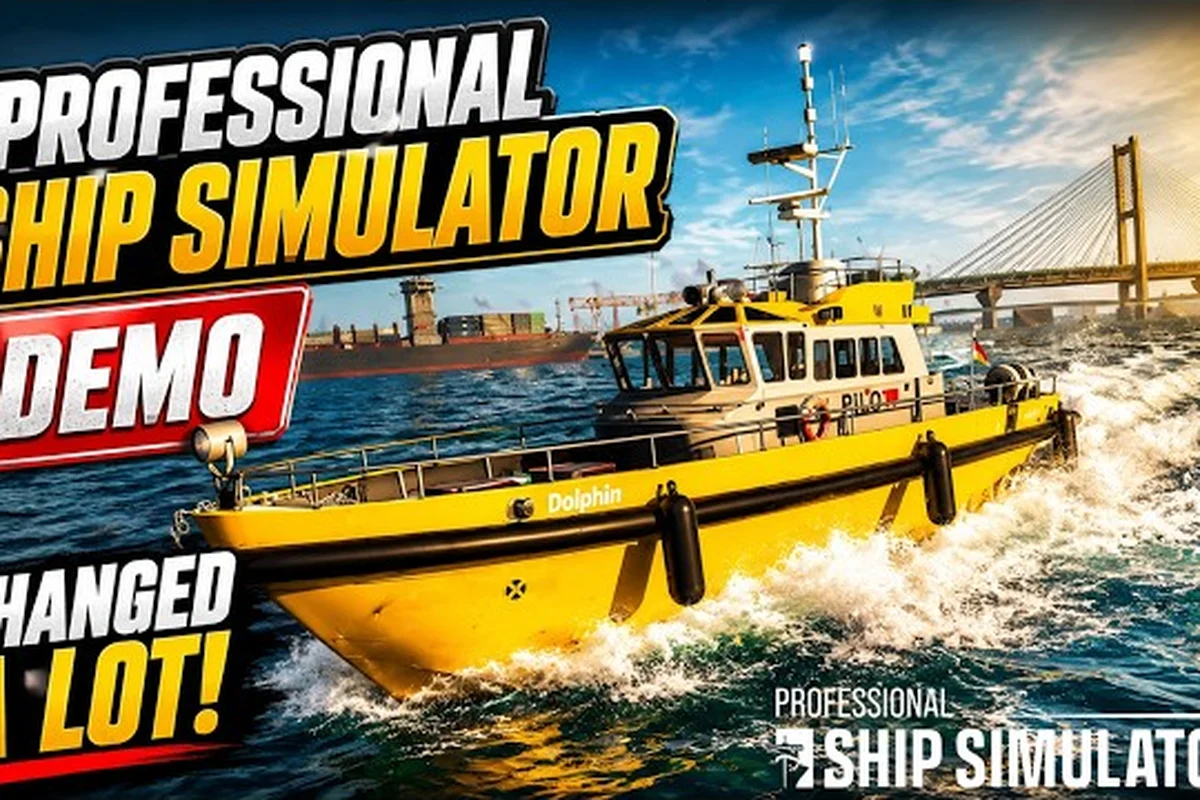
Professional Ship Simulator new maps unlock entirely new ways to experience the open seas, and knowing where to find them — and how to build your own — turns a familiar harbour run into a fresh voyage. Whether you want Steam Workshop ports, a custom chart overlay, or a fast-travel network that skips long transits, the tools are already inside the sim or just one click away on the Workshop. This guide walks through every official, modded, and player-built option so you can pick the routes that match your playstyle.
The game is launching into Early Access on September 16, 2026, which means the Workshop is about to fill with community ports, charts, and editor exports. According to the Professional Ship Simulator release announcement, the developer plans to actively support modders from day one. That timing makes now the right moment to learn how Professional Ship Simulator modded maps work, what the harbour editor can export, and where the real world charts sit inside the existing map.
The Default Professional Ship Simulator Map at Launch
Before diving into add-ons, it helps to know what ships sail on by default. The base Professional Ship Simulator map ships with a focused European theatre centred on the German coast around Rügen, with Dover and a handful of supporting North Sea harbours rounding out the playable area. Each region is sized for medium-length missions rather than ocean-spanning cruises, which keeps load times short and lets you chain jobs without huge fuel runs.
The default chart is a stylised vector overlay rather than a satellite image. Depths, buoys, and shipping lanes are drawn in clear colours so depth-soundings are readable even on lower-brightness monitors, and harbour approach lines are pre-marked for pilot guidance. The current default chart covers roughly 30 nautical miles of open water in the primary region, with secondary regions adding another 15–20 nautical miles of navigable sea.
| Region | Primary Harbour | Mission Density | Best Ship Class |
|---|---|---|---|
| Rügen | Sassnitz | High (8–10 jobs per session) | Tug / Patrol |
| Dover | Dover Western Docks | Medium (5–6 jobs per session) | Container / Ferry |
| North Sea | Helgoland Approach | Low (2–3 jobs per session) | Offshore Supply |
| Inland Canal | Stralsund Lock | Medium (4–5 jobs per session) | Barge / Pushboat |
Players who want a broader stage should treat the default map as a training ground, then layer new charts and harbours on top. For a deeper breakdown of the starting area and where to drop anchor first, the depth data and starting harbour guide covers chart symbols, shallow patches, and dry-dock locations in detail.
Steam Workshop: The Fastest Route to Professional Ship Simulator Modded Maps
Steam Workshop is the single biggest source of Professional Ship Simulator new maps once Early Access goes live. Subscribing to a Workshop item downloads the harbour, chart, or full region directly into your local files, and the in-game map browser picks it up on the next launch — no manual folder juggling required.
Workshop entries generally fall into three buckets. Harbour packs add one or more ports to the existing region; chart packs swap the default vector overlay for satellite tiles or updated bathymetry; and full region packs replace the default theatre with an entirely new coastline. Each type has a different download size and a different impact on frame rate, so it pays to know which you actually need.
| Mod Type | Avg. Download | Frame-Rate Impact | Best Use Case |
|---|---|---|---|
| Harbour Pack | 50–200 MB | Negligible | More mission variety in a known region |
| Chart Pack | 300–800 MB | Low–Medium | Visual realism, real-world charts |
| Full Region Pack | 1–3 GB | Medium–High | Long voyages, new coastline exploration |
| Scenario Bundle | 20–100 MB | Negligible | Career-mode variety without new geography |
Before subscribing, check the mod's last-updated date and the comments section. According to community data shared in the official NauticXP Early Access overview, mods tagged "Verified for EA Launch" have been tested against the current build and rarely cause crashes. Untouched mods from earlier beta branches can still load, but they sometimes spawn ships at coordinates the new patch no longer recognises, which strands a mission in the open sea.
For players who want variety without rewriting the chart, harbour packs are the sweet spot. They drop new ports into the existing Rügen and Dover approaches, instantly adding tug-assist jobs, pilot-transfer contracts, and offshore supply runs without forcing a 2 GB download.
The Professional Ship Simulator Harbour Editor Explained
The harbour editor is the in-game tool that lets players design and export their own ports. It runs from the main menu under Extras → Harbour Editor, and it gives you a grid-based canvas, snap-to-coast snapping, and a library of pre-built quay segments, cranes, fuel depots, and dry-dock walls. Anything you build can be saved locally as a .pssharbour file or uploaded to the Workshop directly from the editor's export menu.
Getting Started With the Editor
The editor opens on a blank 1 km² grid, which is enough room for a small fishing port or a single container terminal. You can expand the canvas up to 4 km² if you need a full industrial harbour, but the larger the canvas, the more memory the editor holds while you work. Community testing suggests that canvases above 3 km² start to feel sluggish on 16 GB systems, so plan your port before expanding.
The toolbar on the left splits into five categories. Quay holds linear dock segments, dolphins, and pontoons; Cranes covers ship-to-shore gantries, mobile harbour cranes, and conveyor belts; Storage adds fuel tanks, container yards, and warehouses; Navigation places buoys, leading lights, and breakwaters; and Decoration drops in lighthouses, traffic cones, and ambient detail props. Each category is filterable by era, so you can build a modern container port or a 19th-century timber pier without the parts catalogue cluttering the screen.
Saving and Sharing Your Harbour
Once a port is finished, the export menu offers three outputs. Local Save writes the file to your Documents/PSS/Harbours folder, where the game picks it up as a private custom harbour. Workshop Upload pushes the file to Steam Workshop with the title, description, and preview image you set in the upload dialog. Scenario Link embeds the harbour inside a scenario file so it can be used in mission packs.
| Export Option | File Format | Visible To | Re-Editable |
|---|---|---|---|
| Local Save | .pssharbour | Single player only | Yes |
| Workshop Upload | .pssharbour + preview | All Workshop subscribers | Yes, with version control |
| Scenario Link | .psstars | Anyone opening the scenario | No, locked into scenario |
For creators who want to chain ports into a single voyage, the Multi-Harbour Region option lets you save up to six linked harbours in one Workshop item. The game treats them as a single region for fast-travel purposes, which means missions generated in one harbour can route you to another without loading a new map.
Players who prefer to build missions around their new ports rather than just sail between them should check the scenario editor walkthrough, which covers how to drop mission triggers into a custom harbour and earn credits from your own designs.
Fast Travel Locations: How to Skip the Transit
Long transits between regions eat up session time, and the Professional Ship Simulator fast travel system exists to compress them. Fast travel is unlocked through the Port Network upgrade, which becomes available after you complete 15 successful missions in the default region. Once unlocked, a teleport option appears in the harbour menu, and you can jump between any two harbours you've already visited for a small credit fee.
The fee scales with distance. A jump between two harbours in the same region costs roughly 50 credits, while a cross-region jump from Rügen to Dover costs closer to 350 credits. According to community data, the average player completes the prerequisite missions within the first 2–3 hours of play, so fast travel isn't a late-game unlock — it just needs a small amount of career-mode progress.
| Route Type | Credit Cost | Cooldown | Best Use Case |
|---|---|---|---|
| Same-Region Jump | ~50 credits | 30 seconds | Quick mission reset |
| Cross-Region Jump | ~350 credits | 2 minutes | Long-haul cargo rerouting |
| Workshop Harbour Jump | ~75 credits | 45 seconds | Testing new modded ports |
| Dry-Dock Teleport | 0 credits | 5 minutes | Repairs without sailing back |
Fast travel is most useful when a high-paying contract spawns in a region your current ship can't reach economically. Instead of sailing back to refuel, you can teleport, pick up the cargo, and earn the bonus without losing the time-based multiplier. For career players who depend on this loop, the money-making and fast-travel guide walks through which mission tiers reward the credit-back when you burn the teleport fee.
Real World Charts and How to Add Them
Real world charts are the most-requested map addition in Professional Ship Simulator, and the game supports them through the Chart Overlay system. Overlays are PNG or WebMercator tile sets that the chart engine can drop on top of the default vector water, so you can replace the stylised depth colours with the actual bathymetry of the North Sea, the Baltic, or any coastline a chart pack covers.
To install an overlay, drop the chart file into Documents/PSS/ChartOverlays/ and the in-game chart menu lists it under Custom Overlays. Toggling one on replaces the default depth colours with the imported file while keeping harbour positions, mission spawns, and collision meshes intact. The result is a real-world chart with the simulator's gameplay sitting on top.
Where to Find Real World Charts
Three sources reliably supply the right format. The first is Steam Workshop chart packs tagged Real World Chart, which arrive pre-tiled and aligned to the default region. The second is the official NauticXP chart repository, which publishes free overlays for major European waterways and updates them with each patch. The third is community-built overlays posted on the developer's forum, which cover smaller harbours and inland canals not included in the official packs.
| Source | Format | Coverage | Cost |
|---|---|---|---|
| Steam Workshop | Pre-tiled PNG | North Sea, Baltic, English Channel | Free–$5 |
| NauticXP Repository | WebMercator tiles | Major European waterways | Free |
| Community Forum | Mixed | Local harbours, inland canals | Free |
| OpenSeaMap | Raw XYZ tiles | Global, requires manual tiling | Free |
Real world charts are not just cosmetic. They change the way you read depth, because real bathymetry is more granular than the default overlay. A 2-metre shoal that the default chart rounds to a single warning ring may appear as a 1.4-metre patch on a real chart, which is enough to ground a container ship with a 1.6-metre draft. Players who switch overlays should re-learn the approach to their home harbour before running a paid contract.
For a sense of how a different chart changes piloting decisions, the best harbour and port guide compares the default chart against a real-world overlay for the most-visited ports, including pilot boarding points and tug stand-off distances.
Choosing the Right Map Setup for Your Playstyle
Not every player needs every Professional Ship Simulator new maps option. A casual player who runs two or three missions per session can stay on the default chart and use the harbour editor for the occasional creative break. A career-mode grinder benefits more from fast travel and modded harbours than from a full region swap. A modder lives in the Workshop and the chart overlay menu. Picking the right mix saves bandwidth, keeps frame rates high, and avoids the overload of having too many ports to learn at once.
The table below maps typical player profiles to the map features that give them the most value. Use it as a quick decision aid before subscribing to a 2 GB region pack you may not need.
| Player Profile | Priority Features | Skip These | Est. Extra Storage |
|---|---|---|---|
| Casual Pilot | Default chart + 1 harbour pack | Full region, chart overlay | 100 MB |
| Career Grinder | Fast travel + workshop harbours | Region packs, editor | 500 MB |
| Real-World Sailor | Chart overlay + real-world Workshop | Default vector chart | 1.2 GB |
| Modder / Creator | All editor features + Workshop uploads | None — full toolkit | 3+ GB |
| Scenario Builder | Editor + scenario link | Region packs | 800 MB |
Whichever profile fits, the Professional Ship Simulator map system is designed to layer cleanly. You can run a Workshop region pack, drop a real-world chart on top, teleport between its harbours, and edit one of them in the harbour editor without the systems fighting each other. That composability is what makes Professional Ship Simulator new maps more than a content drop — it's a toolchain that grows with the player base over the Early Access period.
Frequently Asked Questions
Where do I find the most popular Professional Ship Simulator new maps after launch?
The Steam Workshop is the central hub, and the most-subscribed entries within the first 48 hours of Early Access will surface in the in-game browser's Trending tab. According to community data from the beta, harbour packs from established modders tend to top the chart in the first week, while full region packs pick up steam a few weeks later.
Can I play Professional Ship Simulator modded maps in career mode?
Yes, career mode picks up Workshop harbours automatically once they're enabled in the mod manager. Mission spawns use the same economy as the default region, so contracts pay the same rates and use the same ship-class restrictions, which means a modded harbour doesn't break the credit balance. The game treats the imported port as if it were a native harbour for mission-generation purposes.
How does the Professional Ship Simulator harbour editor compare to a full scenario editor?
The harbour editor focuses on port geometry, layout, and aesthetics — you place quays, cranes, and navigation aids, but mission logic lives in the separate scenario editor. A scenario editor builds the missions that fire inside a harbour, while the harbour editor builds the harbour itself. Most Workshop creators use both, exporting a harbour from one tool and a mission set from the other, then linking them in a single Workshop item.
Will fast travel break my Professional Ship Simulator real world charts?
No, fast travel is independent of the chart overlay. The game loads the active overlay on chart open regardless of how you arrived at the harbour, and the teleport animation runs in chart-coordinate space, so the position always lands on the correct tile. Players who switch between vector and real-world charts mid-session should expect a 2–3 second overlay reload after each teleport.
How big can a Professional Ship Simulator map expansion get through the editor?
The single largest supported canvas in the harbour editor is 4 km², which is enough for a full industrial port with multiple terminals, a fishing harbour, and a small marina. Full region expansions beyond that scale require the developer toolchain, not the in-game editor, and are typically published as official patches rather than Workshop items. Players who want even more space should look for the planned Custom Region Workshop tag, which the developer has signposted for a post-launch update.