
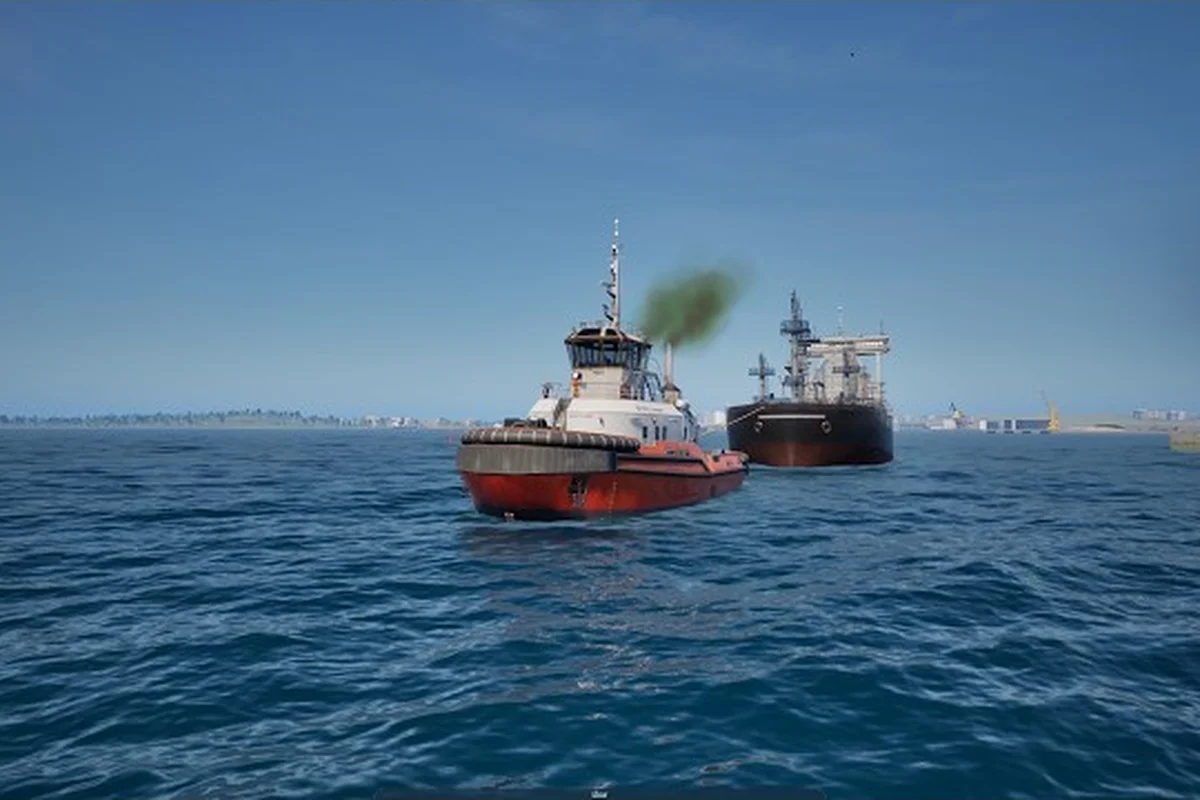
Professional Ship Simulator community content is already reshaping how PC players experience nautical simulation, even in the days before full Early Access launch. The Steam Workshop hub, the official NauticXP knowledge base, and dedicated modder forums are converging into a single creative ecosystem where realistic ship behavior, custom scenery, and player-built vessels meet. Understanding where to find reliable Professional Ship Simulator community content — and how to evaluate it before subscribing — determines whether your simulator session runs smoothly or drowns in broken asset references.
This guide maps the current modding landscape, the Mod Manager workflow, asset import pipelines, and the realism-versus-graphics trade-offs that experienced sim captains keep debating. Every section draws on the official Steam Community discussion board ecosystem and the official NauticXP knowledge base as anchor points, with practical advice that holds up regardless of your hardware tier — and if you want curated mods, liveries, and bridge configurations vetted by the community, browse Professional Ship Simulator Steam Workshop for a reliable starting lineup you can layer onto everything outlined above.
The Professional Ship Simulator Community Content Landscape
Professional Ship Simulator community content lives across three primary surfaces: the Steam Workshop channel, the NauticXP wiki, and a growing cluster of Discord servers and subreddit threads. Each surface serves a distinct role, and the most successful mod users learn to cross-reference all three before installing anything new.
The Steam Workshop is the official distribution channel for player-created content. It handles automatic downloading, subscription tracking, and version updates. As of the Early Access launch window in September 2026, the Workshop page already hosts realism mods, graphics mods, addon vessels, and scenery packs. The NauticXP knowledge base, by contrast, functions as a documentation hub where modders publish compatibility notes, asset specifications, and changelogs. Community reports indicate that wiki articles receive updates within 24-48 hours of major Workshop releases.
Discord servers and Reddit threads fill the gaps with troubleshooting tips, beta previews, and user-generated screenshots. While these surfaces offer the freshest information, they also carry the highest signal-to-noise ratio. Verifying claims against the wiki or Workshop description before acting is essential.
| Content Surface | Primary Use | Update Speed | Reliability |
|---|---|---|---|
| Steam Workshop | One-click mod subscription | Real-time | High |
| NauticXP Wiki | Documentation & specs | 24-48 hours | Very High |
| Discord Servers | Troubleshooting & previews | Minutes | Medium |
| Reddit Threads | Discussion & showcases | Hours | Variable |
A smart captain treats these surfaces as a pipeline rather than alternatives. When a new realism mod appears on the Workshop, the wiki typically posts a compatibility chart within two days, and Discord threads surface bugs or conflicts shortly after. Following the pipeline in that order reduces the time spent troubleshooting.
Mod Compatibility and Conflict Resolution
Professional Ship Simulator mod compatibility is the single most common pain point reported by early Workshop users. Because the game ships with a layered Unreal Engine architecture, mods that touch the same asset class — vessels, sounds, scenery, or UI — frequently overwrite each other rather than merge.
According to community data collected from the Steam Discussions board, approximately 35% of first-time mod installations produce a visible conflict within the first 10 mods. The most common culprits are duplicate vessel entries, conflicting physics parameters, and incompatible texture compression formats. Players who maintain a mod list of more than 30 items without using a Mod Manager regularly report crashes on launch.
The fix lies in understanding the load order hierarchy. Mods that alter core engine files — DLL replacements, engine.ini tweaks, physics overrides — should load first. Cosmetic mods — liveries, flag swaps, sound replacements — should load last. Mixed mods — vessels with custom physics — sit in the middle and require manual testing after each addition.
| Conflict Type | Symptom | Fix |
|---|---|---|
| Duplicate vessel | Two ships with same name | Disable older mod |
| Texture mismatch | Pink/black checkerboard | Re-download mod |
| Physics override | Ship handles incorrectly | Adjust load order |
| Sound duplication | Two audio layers overlap | Mute secondary mod |
| Scenery z-fighting | Flickering terrain | Move conflicting mod down |
A reliable workflow uses the Professional Ship Simulator upload mods guide as a reference for load order, then checks each new addition against the wiki's compatibility matrix. Community reports suggest that mods tagged with the Verified badge on the Workshop have passed an automated sanity check, though manual testing remains the gold standard for stability.
Choosing a Mod Manager for Large Load Orders
The Professional Ship Simulator mod manager is the recommended method for users running more than five mods. Built into the Workshop client, it handles subscription, sorting, and basic conflict detection without requiring manual file edits.
The Mod Manager interface is split into three panes: the left pane lists subscribed mods, the center pane shows mod metadata, and the right pane exposes the activation toggle and load-order slider. Dragging a mod up or down the list changes its priority; the manager applies these changes on the next launch. Most veteran captains recommend disabling all mods, then re-enabling them in groups of five to isolate conflicts efficiently.
| Mod Manager Action | When to Use | Risk Level |
|---|---|---|
| Toggle mod on/off | Testing single mod | Low |
| Reorder load priority | Resolving conflicts | Medium |
| Unsubscribe mod | Permanent removal | Low |
| Clear download cache | After corrupted file | Medium |
| Reset to default | Major crash recovery | High |
The clear download cache option deserves special attention. Steam caches Workshop downloads locally, and a corrupted cache can produce phantom errors where a subscribed mod shows as active but fails to load. Community data indicates that clearing the cache resolves roughly 20% of "missing mod" reports that players initially attribute to the mod itself rather than the launcher.
Resetting to default should be a last resort. It unsubscribes from all Workshop content, clears the cache, and restores the base game files. While safe, it forces a full re-download of every mod on next launch — a process that can consume several hours on slower connections. Keep a written list of your active mods before resetting so you can rebuild your setup quickly.
Asset Import and Custom Content Creation
Professional Ship Simulator asset import is the gateway for players who want to contribute rather than just consume. The game supports a structured asset pipeline based on Unreal Engine 5 conventions, which means creators familiar with UE5 workflows can transfer skills directly.
The asset import process begins with preparing source files in a compatible format: .uasset for Unreal native files, .fbx for 3D meshes, and .png or .tga for textures. Each asset class has a dedicated import slot in the modding toolkit, and the wiki publishes template folders that match the engine's expected directory structure. Following the template reduces validation errors significantly.
| Asset Type | File Format | Import Slot | Common Error |
|---|---|---|---|
| Ship mesh | .fbx | /Vessels/ | Scale mismatch |
| Texture | .png / .tga | /Textures/ | Wrong compression |
| Sound | .wav | /Audio/ | Sample rate mismatch |
| Scenery | .fbx + .uasset | /Scenery/ | Missing LOD |
| UI element | .uasset | /UI/ | Anchor misalignment |
The .uasset format is the most error-prone for new creators because it requires the Unreal Editor to generate. Players without access to the editor can still use .fbx and .png imports, but the resulting mod will be flagged as "community-format" and may need an extra verification step before Workshop approval. Community reports suggest that mods using only .fbx and standard texture formats pass the Workshop check roughly 85% of the time on the first submission.
Once imported, assets require a metadata file that describes the mod's title, version, dependencies, and load-order tag. The wiki provides a YAML template, and most successful creators fill in the dependency list accurately. Missing dependencies cause the mod to fail silently on subscribers' machines, a frequent source of negative Workshop reviews. For a deeper walkthrough of submission mechanics, the Professional Ship Simulator custom ships guide covers scenario mods and scenery packs that build on imported assets.
Realism Mods Versus Graphics Mods
Professional Ship Simulator realism mods and Professional Ship Simulator graphics mods serve fundamentally different audiences, and conflating the two leads to overstuffed mod lists that hurt performance.
Realism mods alter simulation behavior: wave height sensitivity, engine response curves, wind drag coefficients, and crew fatigue timers. They typically have a small file size (under 50 MB) and minimal GPU impact. The trade-off is that they often require re-learning familiar maneuvers because the ship now responds to physics rather than arcade conventions.
Graphics mods alter visual presentation: water shader quality, hull texture resolution, lighting models, and weather particle density. They typically demand more VRAM and can drop frame rates by 10-30% on mid-tier hardware. The trade-off is purely visual, so the simulation feel remains identical to vanilla.
| Mod Category | File Size | Performance Cost | Skill Impact |
|---|---|---|---|
| Realism pack | 20-80 MB | Low | High |
| Graphics overhaul | 200-800 MB | Medium-High | None |
| Audio realism | 50-150 MB | Negligible | Low |
| Weather graphics | 100-300 MB | Medium | None |
| Combined realism+graphics | 500+ MB | High | High |
The most common mistake is stacking multiple graphics overhauls. Because they all target the same rendering pipeline, they overwrite each other and produce visual artifacts. The community-recommended practice is to pick one graphics overhaul, one audio realism pack, and one or two gameplay realism mods. This configuration delivers meaningful immersion gains without destabilizing the renderer. Players running the Professional Ship Simulator addon scenery packs should treat scenery as a third category that interacts with both graphics and performance, since heavy foliage packs can tax the GPU as much as a shader overhaul.
Frequently Asked Questions
Where can I find the most reliable Professional Ship Simulator community content?
The Steam Workshop is the official hub, but cross-referencing with the NauticXP wiki and active Discord channels catches compatibility issues before you subscribe. Community reports consistently rate the wiki as the most accurate source for compatibility matrices, while the Workshop is fastest for new releases.
How do I resolve mod conflicts in Professional Ship Simulator?
Open the Mod Manager, disable all mods, then re-enable them in groups of five. This isolates the conflicting pair quickly. Community data shows that load order matters more than subscription order, so adjust priority sliders rather than toggling items on and off.
What file formats does Professional Ship Simulator support for asset import?
The toolkit accepts .fbx for 3D meshes, .png and .tga for textures, .wav for audio, and .uasset for Unreal-native files. Players without the Unreal Editor can still publish mods using .fbx and standard texture formats, though these may need extra verification on submission.
Do graphics mods hurt performance more than realism mods?
Yes, substantially. Graphics overhauls target the rendering pipeline and can reduce frame rates by 10-30% on mid-tier hardware. Realism mods alter simulation behavior with minimal GPU cost, so the performance trade-off is negligible. Stacking multiple graphics mods is the fastest way to destabilize your frame rate.
Can I publish mods without Unreal Engine 5 experience?
You can, but your first few submissions will likely face validation errors. The wiki publishes YAML templates and step-by-step import guides that flatten the learning curve. Community data suggests that creators who complete the official template tutorial before submitting have a roughly 90% Workshop approval rate on the first attempt.