
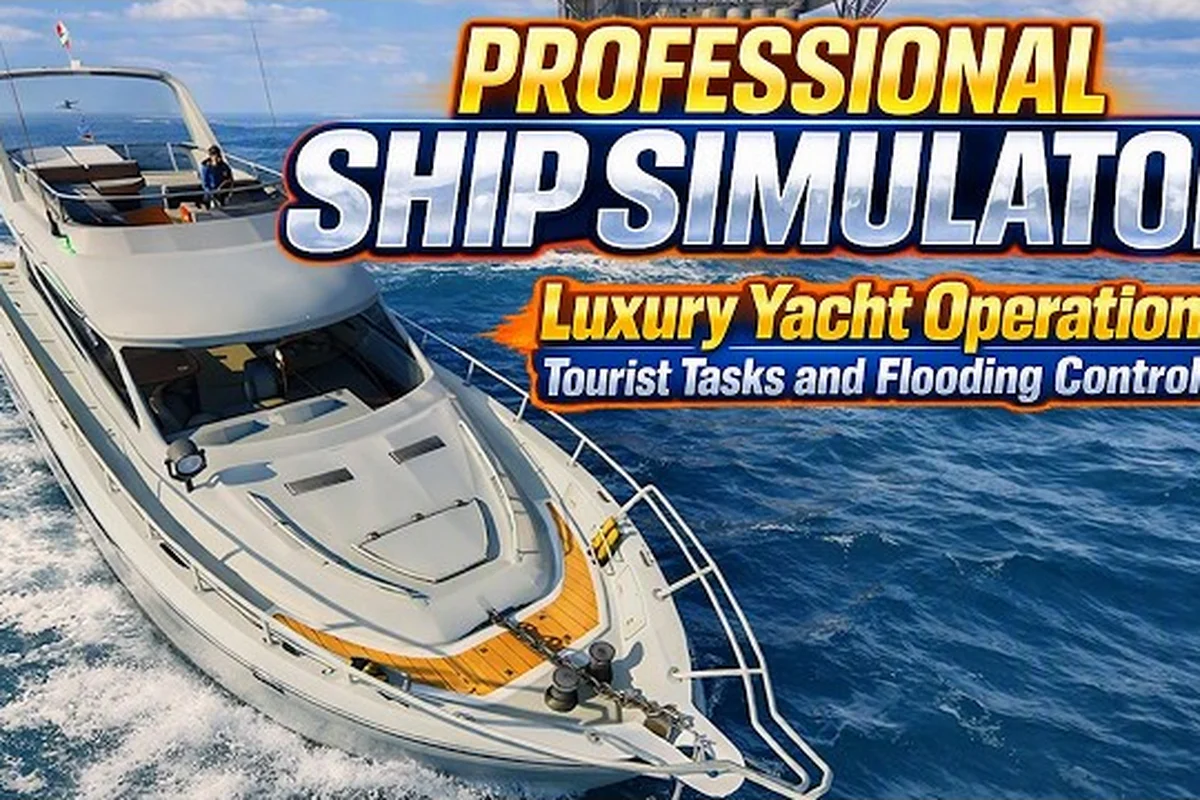
A Professional Ship Simulator tourist charter is one of the fastest ways to earn early credits because the mission asks for calm helmsmanship rather than complex cargo rigging. Pick up passengers at the harbor office, choose a scenic destination, deliver them safely, and collect the reward. The loop is short, the payout is solid for a starter vessel, and the skills you build transfer directly into longer commercial runs later in your career.
According to the official NauticXP tourist charter notes, the mission is requested the same way as a pilot job through a motor vessel, and the harbor office handles passenger boarding once you have confirmed a destination. The mechanics feel approachable even on day one, which is why most captains treat the tourist charter as a stepping stone before moving into heavier work like repair missions or offshore patrol.
Tourist Charter Mission Basics
The tourist charter is a passenger transport job that revolves around comfort, timing, and clean docking. Unlike a cargo run, there is no loading crane to babysit and no weight to trim, but the passengers notice every sudden turn, every hard reverse, and every collision with the pier. A successful run depends on smooth approach speeds, accurate VHF contact, and a final berth that does not scrape the hull.
How To Request The Mission
You request a Professional Ship Simulator tourist charter from the harbor office of any port that supports passenger service. Walk to the office NPC, interact with the desk, and pick the charter option from the mission board. The board shows the available destinations along with a rough payout preview for each one.
-
Motor vessels are the primary accepted hull type, mirroring how pilot missions gate access.
-
Larger ports tend to offer more destination variety and higher base payouts.
-
Once a destination is locked, the harbor office marks the passenger pickup pier on your chart.
After confirmation, the passengers spawn at the designated pier. Board them, perform a safety check on the bridge, and head out following the charted route. The mission does not expire, but leaving passengers waiting docks your reputation rating with the harbor over time, so prompt departure matters.
What Passengers Expect On Board
Passengers expect a stable ride and a sense of progress on the chart. They do not care about engine telemetry, but they absolutely notice when the bow slams a wave at full throttle or when you cut the corner of a channel marker. Treat the throttle like a dimmer switch rather than an on-off button, and keep your heading changes wide and slow.
| Passenger Expectation | Skip Penalty Risk | Quick Fix |
|---|---|---|
| Smooth acceleration | Medium | Throttle up over 5-8 seconds |
| Wide turning radius | Low | Plan turns 200m before waypoints |
| Clean pier approach | High | Match pier heading, slow to <2 knots |
| Visible scenery passes | Low | Route along the charted scenic waypoints |
The charted scenic waypoints are not decorative. They raise your satisfaction score at the end of the mission, which feeds into the tip bonus you receive on top of the base payout.
Choosing A Destination
Destinations vary in distance, scenery density, and base payout. Shorter hops pay less but finish in under 15 minutes, which is useful when you want a quick credit injection. Longer routes pass more lighthouses, coves, and island silhouettes, which boost the satisfaction score and therefore the tip.
| Destination Type | Typical Distance | Base Payout Range | Satisfaction Multiplier |
|---|---|---|---|
| Harbor-to-harbor short hop | 2-5 nm | Low | x1.0 |
| Coastal scenic loop | 5-12 nm | Medium | x1.3 |
| Island round trip | 12-20 nm | High | x1.5 |
| Multi-stop island tour | 20+ nm | Premium | x1.8 |
The multi-stop island tour is the top earner per hour if you can maintain a steady cruising speed of around 12-15 knots, which most starter motor vessels can sustain without straining the ENIS electrical system. For new captains, the coastal scenic loop offers the best balance between payout and risk of route error.
Pre-Departure Walkthrough
Walking through a clean pre-departure routine takes about three minutes and saves you from the most common tourist charter failure: arriving at the destination with a dead electrical system or a fouled propeller. Treat every charter as if the passengers are paying premium for a smooth ride, because in terms of the satisfaction score, they effectively are.
Bridge And Electrical Prep
The bridge of a motor vessel runs on the ENIS power bus, and a tourist charter leans on three subsystems: navigation lights, VHF radio, and the radar/AIS display. Start the main engines first, then bring up the ENIS panel and verify battery state is above 80 percent before you accept passengers.
-
Navigation lights: green, red, white stern, and white masthead all active
-
VHF radio: tuned to the harbor working channel and tested with a one-second press
-
Radar/AIS: warmed up, gain set to medium, range matched to the local chart scale
-
Autopilot: disengaged, manual steering confirmed
Once the bridge is healthy, raise the deck lights at the passenger pickup pier so the boarding animation triggers cleanly. The passengers will refuse to spawn if deck lights are off after dusk, which is a common cause of stuck missions reported by players.
Hull And Mechanical Check
Even on a short hop, a quick hull walk saves repair bills later. Check the engine room for any red telltales, listen for cavitation at idle, and confirm the bilge is dry. The tourist charter is forgiving, but rough water amplifies any mechanical weakness, and you do not want to discover a cracked cooling line halfway through a scenic loop.
If you notice hull damage before departure, head to the nearest dry dock before accepting passengers. According to community testing, entering a Professional Ship Simulator dry dock with the engines shut down lets the automated gate cycle and the repair timer start, which is the only reliable way to clear structural damage without a harbor master ticket. Trying to depart with unresolved damage drops the satisfaction score faster than any rough wave because passengers visibly react to vibration in the cabin.
Chart And Weather Briefing
Open the chart and trace the route with your eyes before you cast off. Mark any narrow channels, ferry crossings, and shipping lanes you will need to cross. Note the wind direction and tidal stream arrows on the chart border because crosswind docking at the destination pier is the single biggest cause of low satisfaction scores.
| Briefing Item | Where To Find It | Why It Matters |
|---|---|---|
| Wind direction | Bridge anemometer or chart border | Affects pier approach at destination |
| Tidal stream | Chart border arrows | Pushes bow off heading in channels |
| Shipping lane crossings | Chart overlay | Requires standby and early VHF call |
| Shallow patches | Depth shading | Risk of grounding near scenic coves |
The depth shading is particularly important for scenic loops because some of the prettier coves sit in shallow water that dries out at low tide. Running aground does not fail the mission, but it costs a hefty chunk of the professional ship simulator mission rewards payout and leaves your passengers standing on a tilted deck until you refloat.
Executing The Charter Smoothly
Smooth execution is mostly about throttle discipline and steady steering inputs. Passengers rate you on the overall G-force profile of the trip, which means jerky corrections are punished even if your average speed is high. Aim for the slowest input that still keeps you on schedule.
Throttle And Steering Discipline
A tourist charter rewards the captain who treats the throttle like a volume knob rather than a light switch. Build speed in small increments over 5-8 seconds, and bleed it off well before each turn. Wide turns look unprofessional to harbor staff but feel luxurious to passengers, which is exactly the tradeoff the satisfaction score is measuring.
-
Approach speed in open water: 12-15 knots for most motor vessels
-
Channel speed: 6-8 knots, matched to chart depth and width
-
Pier approach final 50m: under 2 knots, with a single short burst to kill momentum
-
Pivot turns: rudder max 20 degrees, throttle at idle, let the hull carve
If you find yourself overcorrecting, drop the throttle to idle for a moment and let the hull settle. Most charter failures happen because the captain tries to fix a bad approach with more power, which only amplifies the problem.
VHF Communication Protocol
Every harbor office and most passing commercial vessels monitor VHF Channel 16 or the local working channel. A short, well-timed call clears the air and earns you right-of-way in tight channels. For a tourist charter, you really only need three calls per trip: departure, channel entry, and pier approach.
| Call Phase | Channel | Message Template |
|---|---|---|
| Departure | Working | "Harbor office, vessel [name], departing with passengers, bound [destination]" |
| Channel entry | 16 | "[Vessel name] entering channel, traffic advise" |
| Pier approach | Working | "Destination pier, vessel [name], approaching with passengers, request berth" |
Clear communication does not change the professional ship simulator mission rewards you receive, but it dramatically reduces the chance of a collision event that voids the tip bonus. Players who build a habit of calling every approach report near-perfect tip consistency, according to community data.
Handling Common Mid-Trip Events
Even the most routine charter can throw a sudden fog bank, a crossing ferry, or a curious sightseeing yacht into your path. The right reflex depends on the event, but the underlying principle is the same: slow down, communicate, and never trust another vessel to hold its course.
| Event | Best Response | Payout Impact |
|---|---|---|
| Fog bank | Reduce to 5 knots, engage radar, sound signal | Neutral if handled cleanly |
| Crossing ferry | Slow to standby, call on VHF, pass astern | Tip bonus if graceful |
| Sightseeing yacht | Hold course, slow slightly, let them pass | Satisfaction +5% |
| Sudden wind shift | Reduce sail, adjust heading 5-10 degrees early | Neutral |
The sightseeing yacht is the only event that actively boosts your payout, because the passengers enjoy the close encounter and rate the trip higher. The other three events are pure risk management, and the right move is always the most conservative one that keeps you on schedule.
Maximizing Rewards And Career Progression
The base payout of a tourist charter is fine, but the real money lives in the tip bonus, the satisfaction score multiplier, and the license XP that unlocks bigger vessels. Treat every charter as a small exam, and you will climb the license ladder faster than captains who grind cargo runs for raw credits.
Reward Breakdown By Performance
The reward screen at the end of a charter shows three components: base payout, tip bonus, and license XP. The base payout is fixed by destination, but the tip bonus scales from 0 percent to 80 percent of the base depending on your satisfaction score. License XP is a flat grant that does not scale with performance, so every completed charter pushes you closer to the next license tier regardless of how clean the run was.
| Performance Tier | Satisfaction Score | Tip Multiplier | Net Effect |
|---|---|---|---|
| Bronze | 0-49% | x0.0 | Base payout only, no XP bonus |
| Silver | 50-74% | x0.3 | Small tip, reputation stable |
| Gold | 75-89% | x0.5 | Strong tip, reputation +1 |
| Platinum | 90-100% | x0.8 | Maximum tip, reputation +2, XP +10% |
Shooting for Platinum on every run is realistic once you have memorized two or three coastal routes. The Platinum threshold is not a single perfect maneuver; it is the absence of any single jarring event, which is much easier to achieve than it sounds.
Building Reputation With Harbors
Harbor reputation is a hidden meter that governs which destinations appear on your charter board and which emergency jobs the harbor offers you. Each Platinum charter pushes the meter up by two points, each Gold by one point, and each Bronze or failed run knocks it down by one. Reputation decays slowly when you ignore a harbor for more than a few in-game weeks, so consistency matters more than marathon grinding.
A healthy reputation unlocks the multi-stop island tour at most large harbors, which pays roughly three times the base payout of a short hop and grants bonus license XP on completion. Treat reputation as a long-term investment rather than a daily task, and the harbor will keep feeding you premium work.
Transitioning To Larger Passenger Work
Once you have a few dozen charters under your belt, the harbor office starts offering ferry and water-taxi missions that look like charter jobs but operate on a fixed schedule. These missions pay less per hour than charters but unlock the larger passenger ferries in the vessel tree, which is where the real long-term earning potential lives. The transition is not automatic: you need at least a Coastal Operator License and a reputation of 5 or higher with the destination harbor before the ferry contracts open up.
If you are unsure which missions to tackle next after you have maxed out your charter reputation, the mission list walkthrough breaks down every job type, expected payout, and license requirement in a single table. Many captains use that walkthrough as a checklist while they push toward the offshore license tier.
Comparing Tourist Charter To Other Passenger Jobs
The tourist charter sits in the middle of the passenger mission family, between harbor taxi hops and the long-haul ferry routes. Understanding where it ranks helps you decide when to keep running charters and when to graduate to a different passenger job.
Charter Vs Ferry Vs Water Taxi
| Job Type | Duration | Payout Range | Skill Ceiling | License Requirement |
|---|---|---|---|---|
| Tourist charter | 10-30 min | Low to medium | Moderate | Starter license |
| Water taxi | 5-10 min | Low | Low | Starter license |
| Ferry route | 45-90 min | Medium to high | High | Coastal Operator |
A water taxi run is faster per job but pays less overall, so it only beats a charter if you measure income per real-time minute. A ferry route pays more per job but demands stricter schedule adherence, which punishes new captains who are still learning channel etiquette. The tourist charter is the sweet spot for skill-building, and most veterans recommend running at least 20 charters before touching a ferry contract.
Charter Vs Cargo And Repair Missions
Cargo missions pay more raw credits than charters but offer zero XP toward passenger licenses, which is a problem if your long-term plan is to command a passenger ferry. Repair missions, including dry dock and buoy maintenance work, pay medium credits and grant a unique engineering XP that charters do not. The smartest career path mixes all three: charters for license XP and tips, cargo for raw credits, and repair work for the engineering XP that unlocks bigger hulls later on.
| Mission Type | Credits/Hour | License XP | Engineering XP | Risk Level |
|---|---|---|---|---|
| Tourist charter | Medium | High | None | Low |
| Cargo run | High | Low | None | Medium |
| Repair mission | Medium | None | High | Low |
| Offshore patrol | High | Medium | None | High |
The risk column matters more than it looks. A failed charter costs you reputation but no ship. A failed offshore patrol can damage your hull badly enough to send you straight to the dry dock before you can take the next job, which wipes out half a day of earning potential. Captains who build a steady base of charter and repair work before touching offshore patrol tend to reach the top license tier with healthier hulls and steadier cash flow.
When To Stop Running Charters
There is no hard cap on tourist charters, but the diminishing returns kick in once you have a Coastal Operator License and reputation 5 with two or more harbors. At that point, ferry contracts and offshore patrol missions offer better credit-per-hour rates, and the charter board stops adding new destination variety. The Professional Ship Simulator tourist charter remains a fantastic way to repair a damaged reputation or warm up before a long ferry shift, so even top-tier captains keep one or two harbor offices on rotation for sentimental reasons.
Frequently Asked Questions
What is the best starter vessel for a Professional Ship Simulator tourist charter?
A small motor cruiser with a displacement hull is the best starter because it offers forgiving throttle response, low draft for shallow coves, and an ENIS panel simple enough to troubleshoot mid-route. Most captains stick with this class for the first 20-30 charters before upgrading to a planing hull for longer scenic loops.
How do I raise my satisfaction score fastest?
Focus on three habits: smooth throttle transitions, wide turning radius, and a pier approach under 2 knots. These three habits alone push most captains from Gold to Platinum within a handful of runs, because the satisfaction score punishes jarring events rather than rewarding perfect ones.
Can I run charters back-to-back without docking?
No, the mission requires a clean berth at the destination pier and a passenger drop-off confirmation. Trying to skip the docking cutscene flags the mission as incomplete and pays only the base rate with no tip bonus, so always finish the berthing step even if you are in a hurry.
Does the tourist charter count toward offshore patrol unlock requirements?
Not directly. The tourist charter grants license XP but not the offshore certification tokens that the Professional Ship Simulator offshore patrol mission requires. You still need a mix of repair work and at least one offshore certification token before the patrol board opens at large harbors.
What happens if my ship is damaged mid-charter?
You can still complete the mission, but the satisfaction score drops sharply because passengers react to vibration and list. For serious damage, abort the route, return to the nearest harbor, and enter the Professional Ship Simulator dry dock for a proper ship repair before accepting the next charter. The repair timer is much shorter than the reputation hit from completing a damaged run, so it almost always pays off in the long run.