
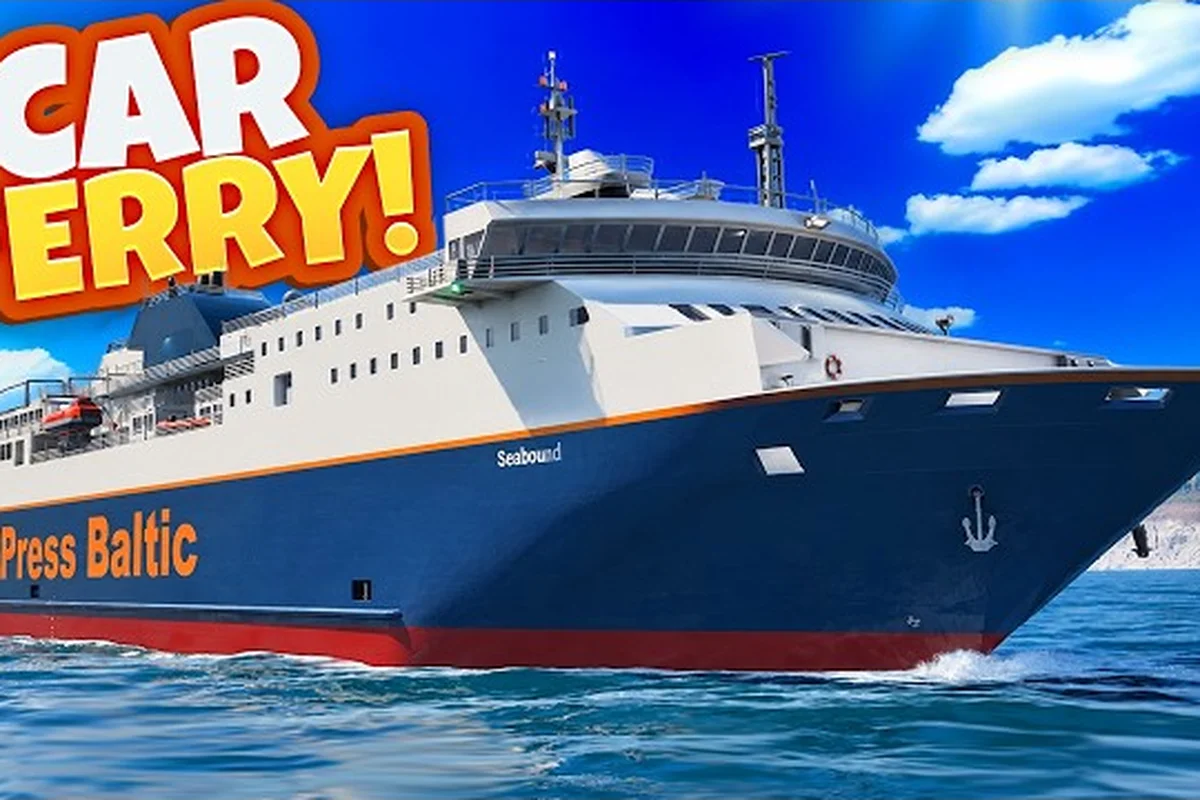
The Professional Ship Simulator car ferry mission rewards captains who treat vehicle transport like a clockwork operation, not a casual cruise. Every route pairs a departure pier with an arrival pier across a real harbor layout, and Harbor Control hands you the line assignment over VHF before you ever cast a line. Get the pre-departure checks right, hold a steady heading between piers, and slot your ferry into the arrival dock without scraping the fenders — that is what separates a profitable round trip from a failed credit payout.
Car Ferry Mission Overview and Mission Objectives
The ferry duty is one of the most accessible Professional Ship Simulator missions because it does not require trawling gear, sonar fishfinding, or tug towing skill. You take command of a car ferry, accept a route from Harbor Control, load vehicles on the departure pier, run the crossing, unload, and repeat within the timer. According to the Ferry Duty wiki entry, the mission counts every clean round trip toward your XP and credit total, with bonuses for punctual docking and safe loading.
What the Briefing Includes
When you start a Professional Ship Simulator car ferry mission, the briefing panel gives you three pieces of information: the departure pier, the destination pier, and the time budget. Harbor Control then issues a radio call on the working channel so you can confirm the ferry line. You will not receive a drawn chart, but the piers are marked with buoys and signage, so a quick radar sweep confirms the bearing before you undock.
| Briefing Element | What It Tells You | Action Step |
|---|---|---|
| Departure Pier | Where to cast off from | Warm engines, check lines, sound one short blast |
| Arrival Pier | Target berth for the crossing | Note the approach angle and any shelter breakwater |
| Time Budget | Maximum minutes for the round trip | Plan speed so you arrive with a 2-minute buffer |
The time budget is tighter than it looks. A single sloppy berthing that takes three corrections will eat most of your buffer, which is why professional ferry captains pre-plan their approach speed before the destination pier is even in sight. Players who treat the timer as a soft suggestion often finish the shift with only one or two completed runs instead of the maximum four.
Why Ferry Duty Matters for Early Progression
The car ferry mission sits low on the unlock tree but offers an outsized training return. Every other mission type — fishing, tug assistance, transport — requires you to handle a vessel that moves differently than a ferry. Once you master ferry maneuvers, the same low-speed control techniques transfer directly into the Professional Ship Simulator manoeuvring guide, which covers harbor handling in depth.
Pre-Departure Checks and Bridge Setup
A clean departure is the difference between a profitable shift and a frustrating one. Before you ever call Harbor Control, work through the same pre-departure checklist that real ferry officers use. Skip steps here and you will be chasing problems at the arrival pier instead of docking cleanly.
Engine, Rudder, and Steering Checks
Start with the engineering panel. Confirm the Main Engine Telegraph is in standby, the Bow Thruster is online, and the steering gear responds to a hard-over test. The car ferry hull is broad and only mildly responsive, which means a dead bow thruster will leave you correcting for set the entire crossing.
| System | Pre-Departure Check | Time to Complete |
|---|---|---|
| Main Engine | Telegraph standby, fuel pressure nominal | 30 seconds |
| Bow Thruster | Test port and starboard bursts | 20 seconds |
| Steering Gear | Hard-over response on indicator | 15 seconds |
| Radar / AIS | Targets visible, CPA alarm armed | 20 seconds |
Mooring Line Release Sequence
Lines on a car ferry come in three pairs: Spring Lines forward and aft, Breast Lines on the capstan, and Stern Lines leading to the dock bollards. Release order matters. Take the spring lines off first so the vessel cannot surge forward into the pier, then walk the breast lines, and only drop the stern lines when the rudder has bite. Reversing this order is the most common cause of ferry hull scrapes at the departure pier, according to community reports from early access testers.
A quick radio call to the dock crew confirming line release prevents the most embarrassing mistakes. If a line snags, the ferry will shear sideways into the pier fender at idle thrust, and that single event will cost more repair credits than an entire shift earns.
Harbor Control Radio Protocol and Route Assignment
Harbor Control is the dispatcher who tells you which ferry line to run. They do not chart your course, but they assign the working route, hand you a slot in the traffic sequence, and warn you about other vessels converging on the same pier. Ignoring their calls results in a route penalty, and three ignored calls in one shift can trigger a mission fail.
Standard VHF Exchange
The Professional Ship Simulator uses a simplified VHF interface rather than freeform typing, which keeps the pacing tight. The first call is a Securite broadcast telling traffic that a ferry is about to depart. The second is a Position Report from your bridge confirming your berth. The third is a Confirmation of the route Harbor Control assigned. Community playtesting on the early access beta branch suggests the confirmation call is the one new captains most often forget, because they assume the route display on the chart plotter is enough.
| Call | Channel | Sender | Purpose |
|---|---|---|---|
| Securite | 16 | Ferry bridge | Warn harbor traffic of imminent departure |
| Position Report | Working | Ferry bridge | Confirm berth and intended track |
| Route Assignment | Working | Harbor Control | Issue the designated ferry line |
| Confirmation | Working | Ferry bridge | Acknowledge the assigned route |
Treat every call as a button press, not a conversation. The Professional Ship Simulator reward system scores you on punctual departure, and every second spent fiddling with the radio delays the actual cast-off.
Crossing the Harbor: Speed, Heading, and Traffic Awareness
Once clear of the departure pier, the crossing itself is mostly about keeping a steady heading and watching for ferry traffic, tug tows, and small craft. The car ferry does not plane, so a typical cruise speed sits between 8 and 12 knots depending on harbor zoning. Pushing beyond cruise wastes fuel and erodes the time buffer for berthing.
Speed Management Zones
Harbors in Professional Ship Simulator are divided into speed zones, and each zone posts a maximum allowed speed. The zone closest to the pier caps you at 5 knots to protect moored vessels, the mid-harbor zone allows 10 knots, and the outer channel opens to 12 knots. Crossing into a higher zone before you clear the breakwater is a citation-level infraction that bleeds your final score.
| Zone | Max Speed | Why It Exists |
|---|---|---|
| Pier Approach | 5 knots | Mooring line safety, swimmer protection |
| Inner Harbor | 8 knots | Wake reduction for small craft |
| Mid-Harbor | 10 knots | Standard ferry traffic lane |
| Outer Channel | 12 knots | Open water, no shore interaction |
Traffic Awareness and CPA Alarms
The bridge radar feeds an AIS overlay that tags every ship in the harbor with a name, heading, and Closest Point of Approach (CPA) estimate. The CPA alarm fires when another vessel will pass within a configured safety distance, and the default is generous enough to keep a beginner safe. The Professional Ship Simulator CPA reference explains the math behind the alarm, but the practical rule is simple: when the alarm sounds, reduce speed and let the other vessel pass before you resume course.
Arrival Docking and Round Trip Reset
The arrival dock is where most of the credit payout lives. A clean berthing scores a Punctual Docking bonus, an Efficient Maneuver bonus, and a Safe Loading bonus once the next batch of vehicles rolls on. A botched docking forfeits all three and can damage the ferry hull, which costs repair credits out of your shift total.
Approach Speed Reduction
Begin reducing speed about 300 meters from the arrival pier. Use the engine telegraph in single-knot steps rather than slamming the throttle to idle, because a car ferry with a single screw will yaw to port when you drop revs suddenly. A controlled reduction keeps the bow aligned with the pier approach and gives the bow thruster a clean platform to work with.
| Distance from Pier | Target Speed | Rudder Input |
|---|---|---|
| 300 m | 6 knots | Amidships, hold heading |
| 150 m | 4 knots | Slight starboard to align bow |
| 80 m | 2 knots | Bow thruster bursts as needed |
| 20 m | 1 knot | Parallel to pier, breast lines ready |
Line Handling on Arrival
Once alongside, the dock crew takes the bow lines first to pin the ferry against the pier, then the spring lines lock the fore-aft position, and only then do the stern lines come aboard. This is the reverse of the departure sequence, and reversing it twice in one round trip is what trains your muscle memory for every other mission type in the game. After the lines are set, the vehicles drive off the car deck and the next batch drives on. The mission clock keeps running during this load, so the faster your dock crew works, the more round trips you can complete.
The car ferry mission shares its Harbor Control workflow with the Professional Ship Simulator mission list, so finishing three full ferry shifts unlocks the same XP threshold that opens transport mission variants. If you find yourself enjoying the harbor discipline, the cargo mission path uses the same berthing fundamentals on a different hull.
Related Mission Types for Skill Transfer
The Professional Ship Simulator fishing mission, tug mission, and transport mission all borrow core skills from ferry duty but apply them to different hulls and objectives. Knowing how each mission differs from the car ferry run helps you plan a progression path through the early license tiers.
Fishing Mission vs. Car Ferry
The fishing mission replaces harbor transit with trawling. You deploy a stern trawl net, monitor net tension, and follow fish-finder leads across the seabed. The pre-departure checks are similar, but the bridge work shifts from radar CPA management to sonar interpretation and net winch control. Community testing reports that captains who master ferry docking first tend to adapt faster to net fishing because the low-speed hull control is identical.
| Element | Car Ferry | Fishing Mission |
|---|---|---|
| Primary Bridge Tool | Radar / AIS | Sonar / Fish Finder |
| Time Pressure | Round trip timer | Net tow duration |
| Reward Source | Docking bonuses | Catch weight + sale price |
| Main Risk | Hull scrape on pier | Net snagging on seabed |
Tug Mission and Tug Assistance
The tug mission flips the script entirely. Instead of berthing your own vessel, you assist a larger ship into its berth using a tow line. The pre-departure checks, Harbor Control radio work, and low-speed maneuvering are the same as the car ferry, but you now have to read the assist ship's drift and apply burst thrust at exactly the right moment. According to the Professional Ship Simulator Tutorials page, tug assistance is rated as a step up from ferry duty in difficulty, but most early access players report the transition as smooth once they have fifty ferry round trips under their belt.
Transport Mission as the Next Step
A transport mission moves cargo instead of vehicles, and the credit payout is higher but so is the penalty for sloppy work. The bridge workflow mirrors the car ferry, with an added cargo manifest you have to verify before departure. If the manifest is wrong, you can deliver the wrong load and lose the contract. Skipping the car ferry entirely and jumping to transport is technically possible, but the community consensus is that ferry duty is the best on-ramp because it forces you to learn the radio protocol and pier berthing sequence at low stakes.
Frequently Asked Questions
What is the fastest way to finish a Professional Ship Simulator car ferry mission?
The fastest clean finish combines an immediate Harbor Control call, a 12-knot outer-channel transit, and a 4-knot approach to the arrival pier starting 150 meters out. The whole round trip lands inside the timer with a 2-minute buffer for the next run, which is enough to clear the maximum four round trips in a single shift.
Do I need the bow thruster for ferry duty?
Yes, the bow thruster is essential because car ferries have a long flat hull that does not respond well to rudder-only maneuvering at low speed. Without the bow thruster you will spend the entire arrival approach correcting for wind set and propeller walk, which burns through your time budget.
How does ferry duty compare to the Professional Ship Simulator fishing mission for credits?
Ferry duty pays moderate credits per round trip with strong docking bonuses, while the fishing mission pays variable credits based on catch weight. Community data from the early access beta suggests ferry duty is the more reliable credit source per minute, while fishing has a higher ceiling when the sonar returns a strong school.
Can I skip the Harbor Control radio call to save time?
Skipping the radio call does not save time — it triggers a route penalty that costs more credits than the call itself would have taken. According to the official Steam page for Professional Ship Simulator, radio compliance is one of the scored mission criteria, and three missed calls in a shift will fail the mission outright.
Is the Professional Ship Simulator transport mission harder than the car ferry mission?
The transport mission is harder because you must verify a cargo manifest and accept penalties for misdelivery, but the berthing fundamentals are the same. Players who finish three full ferry shifts with clean docking bonuses report the transport mission transition as a small difficulty bump rather than a wall, and the same pre-departure checklist applies on both hulls.