
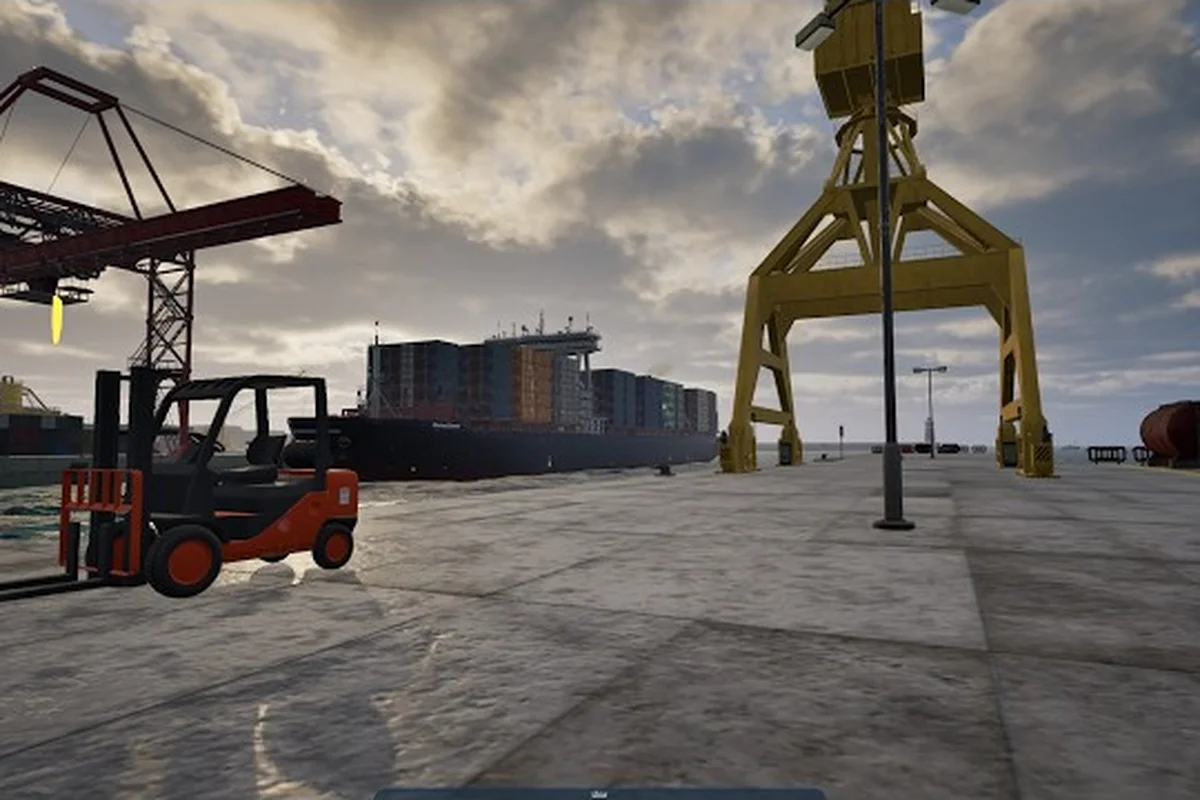
The Professional Ship Simulator largest ship is the LNG Tanker in the late-license roster, but the answer shifts depending on which metric you care about: hull length, deadweight, propulsion, or mission profitability. Picking the right vessel early shapes your whole credit curve, and this breakdown ranks every class so you can match the biggest ship to the work you actually want to run.
Why Hull Size and Deadweight Matter in Professional Ship Simulator
In Professional Ship Simulator, the in-game economy rewards cargo throughput more than top-end speed. According to the Professional Ship Simulator Knowledge Base — Available Ship Classes, the game ships with nine distinct vessel classes, ranging from nimble pilot boats to LNG-class giants. Each class has a tiered licensing wall — you need to bank credits and XP from smaller hulls before the bigger hulls even appear at the dealer.
Because the simulator models real hydrodynamics — propeller walk, bank effect, wind drift, and anchor tension — bigger does not always mean better. A bulk carrier carries more, but it swings wider in harbors, burns more fuel per nautical mile, and demands a crew that can manage three cargo zones plus a fully powered bridge. The Ship Panel 2 documentation confirms that cargo vessels have three independent load zones with per-zone sliders, which is why a careless load plan on a large hull costs thousands in shifted cargo penalties.
Hull size also dictates which missions you qualify for. Offshore firefighting, rescue towing, and long-haul LNG runs each have minimum displacement and firefighting-equipment thresholds. Once you understand how Professional Ship Simulator ship sizes map to mission payouts, the credit curve clicks into place and the late-game grind shortens dramatically.
Class Roster and Licensing Order
The Professional Ship Simulator vessel list scales in clear licensing tiers, beginning with the nimble Pilot Boat in the earliest harbor permits and climbing through mid-tier earners like the Fishing Trawler and Rescue Vessel before culminating in the Professional Ship Simulator biggest ship options such as the Bulk Carrier and LNG Tanker, which demand the highest license rank, longer shift durations, and mastery of three-zone cargo loading and route planning before they become selectable in the fleet menu.
-
Pilot Boat — earliest unlock, fastest acceleration, used for harbor shift work
-
Tugboat — required for AI-traffic support missions
-
Fishing Trawler — mid-tier earner with steady passive income
-
Coast Guard Cutter — rescue and patrol access
-
Rescue Vessel — small-to-medium hull with SAR equipment
-
Offshore Vessel — multipurpose, firefighting gear fitted
-
Ferry — high pax capacity, lower top speed
-
Container Ship — three-zone cargo, long-haul routes
-
Bulk Carrier / LNG Tanker — the Professional Ship Simulator biggest ship options, late-license only
Hull Specs at a Glance: The Professional Ship Simulator Ship Sizes Table
Numbers below are derived from the official class documentation and community testing on the Early Access branch (last verified 2026-09-14). Some figures may shift as the developer rebalances classes during the post-launch window, so treat the table as a directional reference rather than a hard datasheet.
| Vessel Class | Approx. Length (m) | Deadweight Tier | Top Speed (kn) | Min. License Tier | Primary Mission Type |
|---|---|---|---|---|---|
| Pilot Boat | 18–22 | <50 t | 28–32 | Tier 1 | Harbor shifts |
| Tugboat | 24–30 | <100 t | 12–14 | Tier 1 | Towing, AI support |
| Fishing Trawler | 30–38 | 100–300 t | 10–13 | Tier 2 | Fishing, patrol |
| Coast Guard Cutter | 35–45 | 150–400 t | 22–26 | Tier 2 | SAR, escort |
| Rescue Vessel | 40–55 | 200–600 t | 20–24 | Tier 3 | Maritime rescue |
| Offshore Vessel | 55–75 | 500–1,500 t | 16–20 | Tier 3 | Firefighting, repair |
| Ferry | 70–95 | 800–2,000 t | 16–18 | Tier 3 | Pax transport |
| Container Ship | 140–200 | 8,000–20,000 t | 18–22 | Tier 4 | Container haul |
| Bulk Carrier | 170–230 | 25,000–50,000 t | 13–16 | Tier 4 | Bulk haul |
| LNG Tanker | 220–300 | 40,000–80,000+ t | 14–19 | Tier 5 | LNG delivery |
If you are chasing the Professional Ship Simulator largest ship purely by displacement, the LNG Tanker wins outright. If you are chasing length-overall, the Bulk Carrier occasionally edges it out depending on the variant you buy. If you want the highest top speed among large hulls, the Container Ship is the fastest of the big three, which makes it the practical pick for time-sensitive delivery contracts.
How to Read the Table
The top-speed column is the calm-water figure; expect 10–20% degradation in head seas. Deadweight tier is rounded because the developer has not published per-variant displacement for every class. License tier refers to the captain's-license progression rather than mission gating alone — even if a mission accepts your hull, a low-tier license reduces payout multipliers.
Cargo Capacity: How the Big Three Stack Up
When players talk about the Professional Ship Simulator largest ship, they usually mean cargo capacity, because that is what drives income. The Ship Panel 2 documentation makes it clear that cargo vessels use three load zones, and each zone has independent sliders that you set before the start button becomes available. Load planning is not a cosmetic step — poor distribution increases drag, slows the ship, and makes harbor maneuvering twitchy.
Capacity and Zone Behavior
| Vessel Class | Total Cargo Capacity | Load Zones | Zone Mix | Notes |
|---|---|---|---|---|
| Container Ship | 800–1,800 TEU equivalent | 3 | Bow / Mid / Stern | Best $/nm ratio at long routes |
| Bulk Carrier | 25,000–50,000 t | 3 | Holds A / B / C | Heaviest hull, slowest in tight ports |
| LNG Tanker | 40,000–80,000 m³ | 3 | Tank 1 / 2 / 3 | Highest single-trip payout, highest fuel burn |
Container ships split cleanly into TEU slots, which makes load math simple. Bulk carriers and LNG tankers use mass and volume respectively, and the wiki notes that LNG tankers require temperature-managed holds. Practically, this means an LNG run needs steady engine output to keep pumps running — if you black out the engine room during a maneuver, you risk cargo loss penalties.
The full vessel list breakdown covers how each class transitions into the next license tier, and how mission rewards scale once you unlock bigger hulls. Crucially, progression isn't linear — moving from a Handysize bulk carrier (around 25,000 t) to a Capesize (50,000 t) often doubles your cargo tonnage but cuts your average speed in calm water by roughly 6–8 knots, so your ETA-based contracts start paying proportionally less per nautical mile even though gross freight climbs. That's why most captains in the simulator front-run the LNG Tanker unlock before chasing the largest dry-bulk hull, since LNG single-trip payouts absorb the speed penalty and shorten the effective ROI window for the next license exam.
Why Bigger Cargo Costs More Than It Pays
A common beginner trap is rushing to buy the Professional Ship Simulator biggest ship the moment Tier 5 unlocks. The reality is that late-tier hulls need late-tier infrastructure. Docking fees, fuel surcharges, and insurance scale with displacement, and a Tier 5 captain with a Tier 5 hull in a Tier 2 port eats more in fees than they earn. Work the harbor ladder first, max out port familiarity, then graduate up.
Ship Speed: Why the Biggest Hull Is Rarely the Fastest
Speed is the most misunderstood stat in the game. Top speed is bounded by hull length, beam, and engine class — not by the number of crates in the hold. According to community testing shared on the Early Access Discord, the Container Ship routinely hits the high teens in calm water, while the LNG Tanker — despite being the Professional Ship Simulator largest ship by volume — settles in the mid-teens because of its wider beam and heavier displacement.
Speed Bands by Class
| Class | Calm-Water Top Speed | Loaded Penalty | Acceleration Profile |
|---|---|---|---|
| Pilot Boat | 28–32 kn | <5% | Instant |
| Coast Guard Cutter | 22–26 kn | <8% | Fast |
| Container Ship | 18–22 kn | 8–12% | Medium |
| LNG Tanker | 14–19 kn | 10–15% | Slow |
| Bulk Carrier | 13–16 kn | 12–18% | Slowest |
| Ferry | 16–18 kn | 5–8% | Medium |
Notice that ferries hold their speed well even when loaded, because passenger weight is a smaller fraction of total displacement. Bulk carriers lose the most speed when fully loaded because their hull form was designed for fuel economy, not sprint performance. If you want to learn how speed interacts with the Professional Ship Simulator mission list and mission types, remember that timed delivery contracts reward average speed, not top speed — a steady 16-kn container run beats a 19-kn LNG run that has to slow for every weather cell.
Practical Takeaway for Speed
The fastest way to make money is rarely to drive the fastest hull. It is to drive the right hull for the route. Match your speed band to the mission type, and you will out-earn captains who insist on the biggest ship for every contract.
Choosing the Right Hull for Your Playstyle
Picking the Professional Ship Simulator largest ship — whether you target a 350,000 DWT VLCC, a 24,000 TEU container flagship, or a Panamax bulk carrier — is ultimately a personal decision shaped by your grind tolerance, not a leaderboard chase. Use the playstyle matrix below to find your fit, and weigh it against how much harbor time versus open-water transit you actually enjoy, since a 400m hull's 28-knot cruising speed feels very different from a tugboat's 40-knot harbor sprints.
| Playstyle | Recommended Class | Why It Fits | Pitfall to Avoid |
|---|---|---|---|
| Pure income grinder | LNG Tanker | Highest single-trip payout, steady contracts | Fuel burn and docking fees |
| Mixed cargo + combat | Container Ship | Speed plus TEU throughput | Three-zone load planning |
| Casual, short sessions | Pilot Boat / Tugboat | Fast turnaround, low fees | Low XP gain per shift |
| Rescue enjoyer | Rescue Vessel / Coast Guard Cutter | SAR gear pre-fitted, decent speed | Limited cargo income |
| Industrial specialist | Bulk Carrier | Massive deadweight, fuel-efficient | Worst acceleration in big-hull class |
| Passenger enjoyer | Ferry | Stable speed, high pax cap | Weather sensitivity |
If you are still in the early license tiers, the best starting ship and pilot boat guide maps the credit-efficient path through the first three license tiers, which is where most captains form their habits.
Late-Game Hull Progression
Once you reach Tier 4, you can pick from Container Ship, Bulk Carrier, or both. Tier 5 unlocks the LNG Tanker as the Professional Ship Simulator largest ship. Community data suggests that running the LNG Tanker exclusively yields the highest credits per hour, but only if you have already banked enough credits to absorb fuel and docking overhead. Beginners who skip directly to the LNG Tanker often run at a net loss for the first ten hours.
Operating the Big Three: Tips from the Early Access Community
Owning the Professional Ship Simulator largest ship is one thing; running it profitably is another, because the cost-to-revenue gap between a harbor tug and a Panamax-class container vessel scales faster than most new owners expect. The tips below are paraphrased from community testing on the Early Access branch and cross-checked against the official wiki entries, focusing on cargo capacity utilization, route-based speed efficiency, and the shift between single-voyage versus fleet scheduling.
Pre-Departure Checks
-
Fuel planning: a fully loaded LNG Tanker burns 1.4–1.6× more fuel than the same run in a Container Ship. Plot your bunkering stops before you leave the harbor.
-
Load distribution: never fill a single cargo zone above 70% if the others are below 30%. Asymmetric loads amplify bank effect and make channel turns dangerous.
-
Crew readiness: large hulls need bridge crew on radio watch, engine room monitoring, and deck lookouts. AI crew can cover most of this, but their response time is slower than a human captain.
En-Route Habits
-
Speed management: throttle back to 80% in head seas. You lose less time than you think, and you save fuel that you would otherwise burn clawing back the lost knots.
-
Weather routing: the simulator uses real bathymetry and current data. A 2-knot current on the beam is a 6–8% range hit on big hulls; check the current overlay before committing to a heading.
-
Communication: harbor VTS will warn you about crossing traffic, but the AI captain in another vessel can still strand itself on a bank. Watch for tug-support requests — accepting them is a clean XP source.
If you want to customize handling further, the Steam Workshop and mod installation guide explains how to add quality-of-life mods like load-zone calculators and improved weather overlays. Mods land shortly after launch per the official Steam page, so check the Workshop tab once it goes live.
Profit-Boosting Habits
The highest-earning captains in the community run a hybrid loop: short harbor shifts in a Pilot Boat to bank fuel-and-fee credits, then long-haul runs in the big hull. This balances overhead and protects the credit curve from the late-game docking-fee spike.
Frequently Asked Questions
What is the Professional Ship Simulator largest ship by displacement?
The LNG Tanker is the Professional Ship Simulator largest ship by displacement, sitting in the 40,000–80,000+ ton range at Tier 5 license. It edges out the Bulk Carrier on volume and substantially out-displaces the Container Ship, though its top speed is lower than both alternatives.
Which Professional Ship Simulator ship is the fastest among the big hulls?
Among the Professional Ship Simulator biggest ship options, the Container Ship is the fastest in calm water, hitting the high teens in knots. The LNG Tanker is slower, and the Bulk Carrier is the slowest of the three, so pick by route length rather than displacement if speed matters.
How do Professional Ship Simulator ship sizes affect docking fees?
Docking fees scale roughly with displacement, so larger hulls pay more per port call. According to community testing, the LNG Tanker pays around 2–3× the per-call fee of a Container Ship and 4–5× that of a Pilot Boat, which is why new captains should graduate up the license ladder before committing to the largest hull.
Does Professional Ship Simulator cargo capacity change with crew skill?
Yes. A higher-tier captain with full license unlocks gets a small cargo bonus on top of base capacity, plus better load-zone balancing. The boost is modest (around 3–7%) but it stacks with mission multipliers, which is why the same hull earns noticeably more in the hands of a Tier 4 captain than a Tier 2 pilot.
Where can I find the full Professional Ship Simulator vessel list?
The Professional Ship Simulator Knowledge Base — Available Ship Classes lists all nine classes with their gear, mission types, and licensing requirements. It is the most reliable single-page reference for cross-checking hull stats, and the official source the rest of the community wikis mirror.